Short answer
Most swelling after surgery comes down with time, plus a few plain habits: a raised head, cold used the way your aftercare sheet says, short walks, and a break from heat, alcohol and hard exercise. We found no good evidence that anything sold afterward speeds it up. Swelling that suddenly grows needs the clinic now; a fever, redness, or pain that keeps building needs the doctor the same day; trouble breathing or chest pain means 119.
Day three often looks worse than day one. It is also the day the second menu starts to look tempting.
A Seoul recovery week comes with two menus. The first is the aftercare sheet: sleep propped up, ice in short rounds, no jjimjilbang. The second arrives by chat or at the desk: deswelling injections, lasers and lymphatic sessions. Only the first is written for your operation.
If you remember one rule, remember this. Your sheet beats any general guide, including this one, and medical questions go to the doctor who operated, not to a coordinator or interpreter. Our stay planner covers when you can fly; this guide is the practical version, day by day.
Why does swelling get worse before it gets better?
Swelling is often fluid building up in tissue.1 After facial surgery, some bruising, swelling and numbness are normal, and one NHS facial surgery leaflet says swelling peaks around days three to four.2 ASPS adds that after a nose job, swelling can come and go, and look worse in the morning, for the first year.3
So a puffy morning on day four is the usual pattern, not a failed operation. After eyelid surgery it is often uneven, too: our double eyelid guide notes that one lid often settles first.
How long does swelling last after surgery?
It depends on the operation. The sources give these ranges.
From NHS pages, an NHS hospital leaflet, ASPS and published studies, checked October 2026. Typical ranges, not a promise. Your surgeon's timeline wins. For toxin, filler and lasers, see our skin treatment aftercare guide.
Most rows end after you fly home; plan photos around that.
What helps in the first days, and how strong is the evidence?
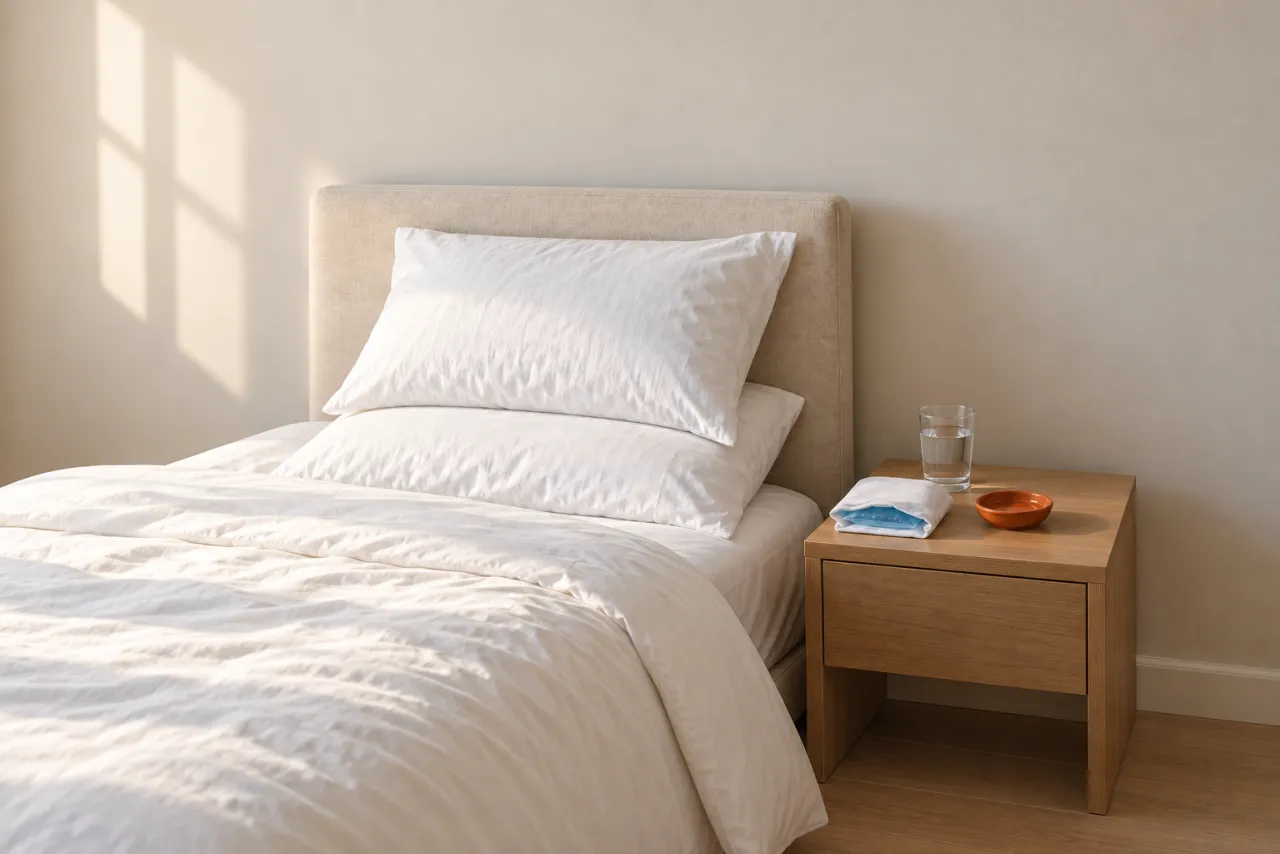
Head up. NHS pages ask you to prop your head up with pillows for a couple of days after eyelid, nose and facelift surgery.4, 6, 7 A 2016 systematic review of rhinoplasty studies found agreement that raising the head after surgery reduces swelling and bruising.13 Ask the hotel for extra pillows, and avoid stooping or bending over.2
Cold, on your sheet's schedule. The evidence is real but modest. A 2016 meta-analysis of four studies, all after facial bone surgery, linked a temperature-controlled cooling mask to less facial swelling on days two and three, and asked for trials after cosmetic facial surgery.14 A 2023 rhinoplasty review called cold promising.15 The schedules disagree. Three NHS eyelid leaflets say ice on and off for the first 48 hours; five to ten minutes every two to three hours for three to four days; or 15 minutes, six to eight times a day.5, 12, 16 So "48 hours" is one hospital's rule, not a law. Wrap the ice in a damp cloth; one leaflet says to let a pack that feels too cold sit for five minutes first, to avoid frostbite.12
Short walks, not tours. The sourced reason to walk is blood clots, not your face. One NHS leaflet asks you to walk or move your feet regularly in the week after facial surgery, and the NHS clot page says to walk regularly if you can.2, 17 Think hotel corridor, not palace grounds: ASPS lists long walking or bus tours among things to avoid after surgery.18
No heat, alcohol or hard exercise for now. ASPS tells patients not to sunbathe, drink alcohol, swim or exercise after surgery.18 How long varies. One NHS leaflet says no vigorous activity for five days after facial surgery, to prevent bleeding.2 NHS pages say no saunas for at least two weeks after a facelift, strenuous exercise again at four to six weeks after a nose job, and no heavy lifting or strenuous exercise for at least a month after breast augmentation.6, 7, 10 Ask for your number in days.
Wear what they gave you. A compression garment, face mask or dressing is part of the plan when the surgeon provides one.2, 8, 9 Smokers may heal more slowly, so tell the surgeon.2 Food has its own guide, what to eat after surgery, and our sunscreen guide covers the sun.
What do the first weeks look like, day by day?
Each timing names the operation it comes from.
Examples from NHS pages and NHS hospital leaflets, checked October 2026. Each day belongs to the operation named. Your sheet sets the real dates.
Seoul makes three of these rules hard: the jjimjilbang, the soju dinner and the outdoor sightseeing day. Move all three to the next trip.
Are deswelling packages, massage and supplements worth it?
The medicines with trial evidence are given by the surgical team around the operation. Steroids reduced early swelling after rhinoplasty, with no measurable benefit by day seven, and tranexamic acid reduced bleeding and lower-lid swelling in the first week.19, 20 Those trials did not test add-on injections or lasers bought days later. If one is offered, ask for the generic drug name, who gives it, and why you need it.
Lymphatic massage has thin evidence for cosmetic surgery. A 2023 review built its case on lymphedema, a different disease.21 Some surgical teams do prescribe massage for a stated reason, such as lumps in the contour after facial surgery.2 That is your surgeon's instruction, not a package.
For arnica and bromelain, a 2016 systematic review found mixed results and insufficient data to support either after a procedure.22 Tell the surgeon before you take any supplement.
Should you use a warm compress after surgery?
Not unless your sheet says so, and not in the first days. A warm towel, a heat pack and a jjimjilbang are all heat. The NHS says no saunas for at least two weeks after a facelift and no hot baths after a nose job.6, 7 One thread lift study banned heat on the treated area for at least a month.11 Fresh filler has its own rules in our skin aftercare guide.
Yet one NHS eyelid care plan allows optional warm compresses after the first week, and says to stop if the swelling gets worse.12 "Cold for 48 hours, then warm" is one sheet's advice for one operation, not general advice.
When is swelling a reason to call the doctor today?
Normal swelling slowly gets better. These signs do not.
From NHS pages and leaflets, the CDC and published reviews, checked October 2026. Not a full list. If you are unsure, call.
Timing matters most after a facelift. A review called expanding hematoma the most common facelift complication, at about 2 to 4 percent, with most appearing in the first 12 hours, often after office hours.23 In Korea, 119 is the ambulance number, and the 1330 tourism hotline offers interpretation, including three-way calls, from 7 a.m. to midnight.26