Short answer
Eat what your surgeon's diet sheet says, because the rule changes with the operation: two-jaw surgery can mean fluids first and soft food for about six weeks, tooth removal a few soft days, nose surgery a light first day and no steaming-hot meals for two weeks, and eyelid surgery no food rule at all in the leaflet we read. In Seoul, rice porridge, plain soft tofu, eggs, yogurt and cooled mild soups cover most soft days. Go easy on salty broths, skip alcohol while you heal, and do not smoke.
Recovery food in Seoul is not a cooking problem. It is a shopping problem.
You are in a hotel room with a kettle, a swollen face and a phone. The clinic handed you a sheet, maybe in Korean, maybe in three lines of English. Maybe there is a convenience store downstairs and a delivery app on your phone. Most of what you need is in both. So is most of what the sheet tells you to skip.
If you remember one rule, remember this. Before the operation, ask the surgeon three things: what texture, for how many days, and what to avoid. Then shop the night before, while you can still walk and chew.
This guide is about food. For flying, stay length and swelling, see how long to stay in Korea for plastic surgery and how to reduce swelling after surgery.
What does the surgeon's diet sheet usually say?
It depends on where the cuts are. Surgery inside the mouth changes what you can eat for days or weeks. Surgery on the nose or eyelids mostly leaves your plate alone. The leaflets below come from UK public hospitals, which publish theirs. Your Seoul clinic's sheet wins.
From UK hospital leaflets and one Korean case series1, 2, 3, 4, 5, 6, checked October 2026. A list of questions to ask, not a diet plan. Your surgeon's or dentist's sheet wins.
Two-jaw surgery is the long one. One NHS leaflet puts patients on fluids first, then a soft diet for about six weeks, and says it is normal to lose some weight.1 Jaw contouring is a different operation that leaves the bite alone, but its incisions are also inside the mouth. Food is soft and cool at first, and the mouth has to stay clean; our jaw reduction guide explains why. We found no published diet timeline for contouring, so ask for the number of weeks in writing.
After a tooth comes out, the risks are bleeding, scalding and food packed into the socket. The NHS says to avoid alcohol and very hot drinks and not to eat hard or crunchy food.3 One NHS dental service asks patients to rinse with warm salt water up to four times a day and after eating, from the day after, for seven days.4 Follow your own dentist if the advice differs.
After nose surgery, the rule to remember is temperature.5 If a stew arrives bubbling, let it sit. After eyelid surgery, the general points below on salt, alcohol and smoking still apply.
What soft foods can you find near a Seoul hotel?
Usually enough without a kitchen. A kettle, a microwave if the room has one, and the patience to read labels.
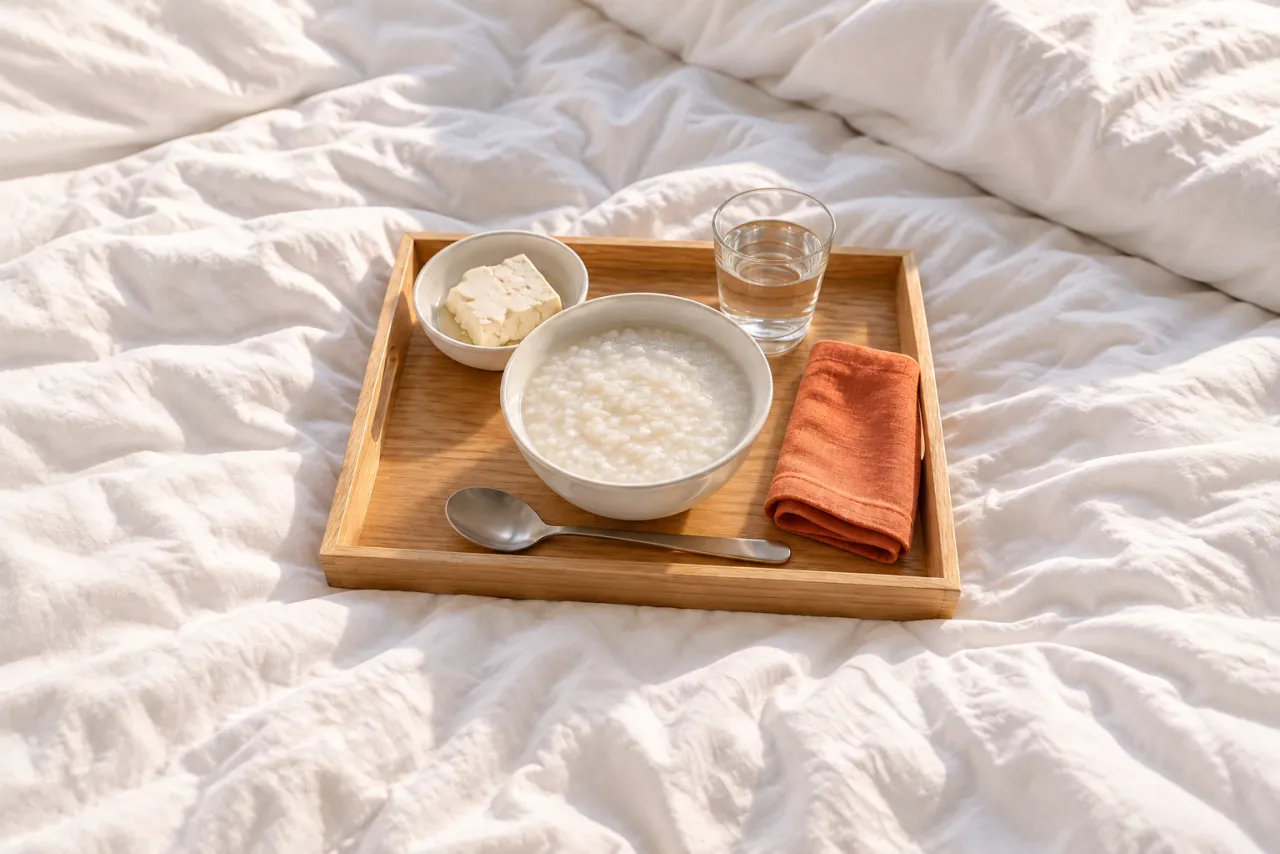
- Rice porridge (juk, 죽). Sold in pouches and cups in many convenience stores and supermarkets, and by porridge restaurants on delivery apps. Start with plain. After tooth removal, pick a smooth one or ask the dentist, since rice grains can lodge in the socket.4
- Plain soft tofu (sundubu, 순두부). Often sold chilled in tubes and tubs. It is not the same as sundubu-jjigae, the red stew with the same name, which is spicy and averaged 679 to 1,239 mg of sodium a portion in one Korean study.7
- Eggs. Steamed egg (gyeran-jjim, 계란찜) or soft scrambled eggs, for protein that needs little chewing.
- Yogurt and milk drinks. Easy protein that can be eaten cold.
- Mild soups and broths. Cooled, and with an eye on the sodium line of the label.
- Bananas and other soft fruit. For fiber, which matters more than it sounds (see the painkiller section below).
A delivery app widens the menu to porridge shops and soup restaurants. Set it up and test one order before surgery, not with a swollen face. Our Korea entry requirements guide notes that a local phone number helps with delivery orders and with apps that verify by text.
Is seaweed soup good after surgery?
It is the traditional Korean soup after childbirth, not a surgical diet. Records from the Goryeo and Joseon dynasties describe women eating it after giving birth, and postpartum women today often eat it three times a day in the early weeks.8
Two things to know first. It is a salted broth: in a Korean study, a bowl averaged 568 to 744 mg of sodium, depending on whether it was made at home, in a cafeteria or in a restaurant.7 That is roughly a third of the WHO's adult limit of less than 2,000 mg a day, though less than many red stews.7, 9
And it is seaweed. A Korean survey, citing earlier work, puts about 1,705 micrograms of iodine in a 250 mL bowl.8 The NHS says adults need 140 micrograms a day and that high doses over long periods could change how the thyroid works.10 If you have a thyroid condition, ask your doctor before you eat it daily.
Should you cut salt and spicy food after surgery?
Cut the salt. The spicy question is smaller than it sounds.
ASPS's recovery checklist tells patients to avoid sodium because it can cause postoperative swelling.11 In Seoul, look for it in broth and side dishes. In the same Korean study, a restaurant bowl of spicy beef soup averaged about 3,270 mg of sodium, more than WHO's daily limit in one bowl.7, 9 Cabbage kimchi averaged about 640 mg per 100 g.7
Convenience-store meals are not a way around it. Korea's consumer agency tested ten popular convenience-store lunch boxes in 2023 and found the side dishes alone could add 1,101 to 1,721 mg of sodium, 55 to 86% of the daily reference value.12 Its advice was to read the nutrition label and keep side-dish portions in check.12 Leave most of the broth in the bowl.
The only published spicy-food rule we found is dental: avoid very hot, cold, spicy, sharp or crunchy foods for 2 to 3 days after tooth removal.4 We found none for nose, eyelid or body surgery. The better reason to wait is the salt above. Kimchi manages salty, spicy and crunchy at once. It can wait until your surgeon says you can chew it.
When can you drink alcohol or smoke again?
Not during the recovery, and ask for the number of days.
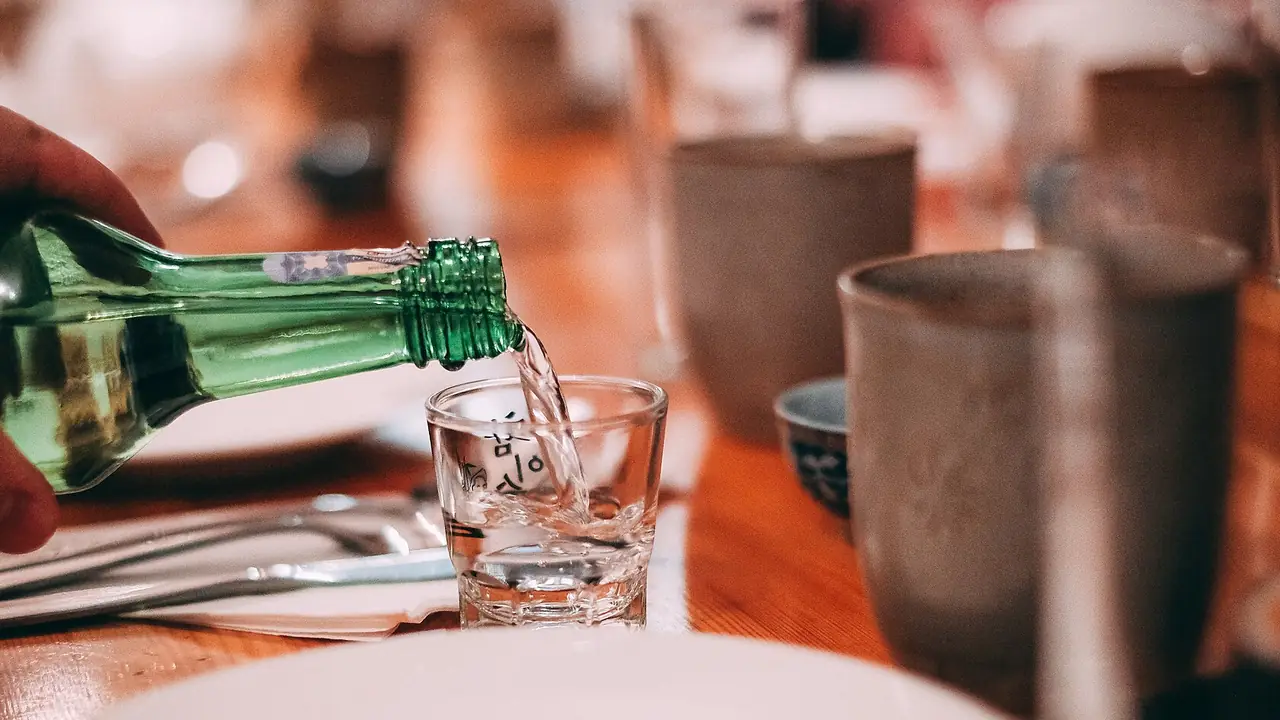
Alcohol. ASPS lists alcohol with sunbathing, swimming, long tours and exercise as things to avoid after surgery.13 Surgeons quoted by ASPS add that alcohol dilates blood vessels, raising the risk of bleeding and prolonged swelling, and that it should not be mixed with pain medication.14 The NHS advises against alcohol on codeine, because it can increase the side effects.15 Soju counts.
Smoking and vaping. Experts writing in ASPS's journal advise cigarette smokers to stop at least four weeks before plastic surgery. Smokers have more complications after plastic surgery, and skin flap problems are thought to come from nicotine reducing blood flow. The same authors call stopping e-cigarettes a prudent step, while noting that direct evidence is lacking.16 After surgery, an NHS nose leaflet says smoking impairs healing, and NHS dental advice says it raises the risk of infection.3, 4, 5
Water, protein and the painkiller problem
ASPS's checklist asks for a balanced diet rich in protein, vitamins and whole foods, and plenty of water every day.11 One surgeon quoted by ASPS says that for many patients, getting enough protein is a challenge.14 On a soft week, eggs, plain tofu, yogurt and milk do most of that work.
The painkiller problem is constipation. The NHS lists it as a common side effect of codeine, and for co-codamol (acetaminophen, called paracetamol in the UK, with codeine) it suggests more fiber from fruit, vegetables and cereals, several glasses of water or another non-alcoholic drink a day, and gentle exercise if you can.15, 17 A porridge-and-yogurt week has little fiber, so add soft fruit on purpose. If it does not settle, ask the clinic or a pharmacist.
Supplements need the surgeon's OK. Surgeons quoted by ASPS list vitamin E, ginkgo biloba, garlic, ginseng and fish oil among supplements that can raise the risk of bleeding, and say every vitamin and over-the-counter product should be reviewed before surgery.14 In Korea, check any tonic drink or tea for ginseng (인삼) or red ginseng (홍삼) on the label. A drink sold for swelling is still something to show the doctor.
What to buy and ask before the operation
Shop the night before:
- Rice porridge, a few pouches, plain first
- Plain soft tofu, eggs, yogurt or milk
- Bananas or other soft fruit
- Bottled water for a day or two
- Any prescription the clinic gives you, collected before you are drowsy
Ask the surgeon, in writing:
- "What texture can I eat, and for how many days or weeks?"
- "Any limits on hot, cold or spicy food, and until when?"
- "When can I drink alcohol again?"
- "Should I rinse my mouth after eating, and with what?"
- "Can I keep taking my vitamins and supplements?"
For delivery request notes and restaurant orders. A request; the kitchen decides.