Noraebang in Seoul: private singing rooms vs coin karaoke, how to enter, English song search, 2026 price bands, etiquette, and what 노래방 means.
PK
Peep Korea Editorial · 15 min read
Short answer
A noraebang (노래방) is a private singing room you rent by the hour, not a Western karaoke bar with a stage and strangers watching.1, 2 Walk in, tell staff your group size and how long you want, take the remote or tablet, switch the keyboard to English with 한/영, and queue songs with 예약. (ref. 5, 6; Peep note) Coin noraebang (동전 노래방) booths sell songs or short time blocks one at a time, which suits a solo visitor or a quick break between dinners.5, 6
The first time you open a noraebang door, the sound cuts out behind you. Two mics, a screen of lyrics, a tambourine on the sofa, and nobody else. That sealed room is the whole point of Korean karaoke: you sing with the people you brought, not for a bar crowd.
Below: what the word means, how room and coin formats differ, where clusters sit in Hongdae, Gangnam and Myeongdong, how English song search works, what independent 2026 guides report for prices, food and drink ordering, and the etiquette that keeps a group night flowing.
Updated November 2026. Prices, youth hours and how-to steps checked 6 November 2026. Price boards change by neighbourhood and hour, so confirm at the desk before you pay.
Quick answer
Private room: pay by the hour for a closed room; the rate is for the room, not per person.1, 5
Coin booth: pay per song or a short time block in a compact booth; walk in and walk out.5, 6
English songs: most machines carry pop catalogues; press 한/영 so Latin letters type correctly.5, 7
Where: look for 노래방 or 코인노래방 signs in Hongdae, Gangnam and Myeongdong side streets. (ref. 2, 3; Peep note)
Youth hours: singing practice halls (노래연습장) may admit under-19s only from 09:00 to 22:00. Outside those hours, entry needs a parent or guardian with them, written entry consent, or another decree exception. This is not the same rule as karaoke bars or entertainment venues.8, 9, 11
What does noraebang mean?
Noraebang is Korean for "song room": 노래 (norae, song) plus 방 (bang, room).4 Pronounce it roughly "noh-rae-bang", with a soft "r" and a final "ng". English speakers also write "norebang"; both spellings point to the same Hangul, 노래방.
Seoul's official tourism site groups noraebang inside "bang" culture: private rooms for singing, gaming, bathing and reading that grew partly because inviting friends into a small family home is less common.1 VisitKorea frames the same idea as Korea's "room" culture seen in K-dramas and variety shows.3
Q. Is noraebang the same as karaoke? Same hobby, different room. Western karaoke often means a public stage. A Korean noraebang is a soundproof room rented for your group only.1, 2
Q. How do you say it to staff? "Noraebang isseoyo?" is "is there a noraebang?", and pointing at 노래방 on a building sign works just as well. More phrases sit in our Korean phrases guide.
How is a noraebang different from a Western karaoke bar?
You do not wait for a host to call your name on a stage. You take a numbered private room, shut the door, and the only audience is the people who walked in with you.1, 2
Visit Seoul's bang-culture page describes the routine: buy a room by the hour at the counter, take a song book or list, and sing to the screen "on your own personal stage".1 Many rooms also stock tambourines and spare mics so the group can cheer without shouting over the track. (ref. 2; Peep observation)
Nightlife clubs and public karaoke bars are a different night out, and entertainment venues (유흥주점 / 단란주점) ban under-19s even with a guardian.11 This guide stays on singing practice halls (노래연습장); for neighbourhood context around Hongdae and Itaewon, see Seongsu, Hongdae and Itaewon.
Q. Can I go alone? Yes. Coin booths are built for one or two people, and standard rooms will take a solo guest when space is free. (ref. 5, 6; Peep note)
Q. Do I need a reservation? Usually no. Walk-ins are the norm; Friday and Saturday nights in busy districts can mean a short wait. (ref. 5; Peep observation)
How do you find and enter a noraebang in Seoul?
Look up for vertical signs that say 노래방, or 코인노래방 for coin booths. Rooms often sit on the second or third floor of mixed-use buildings, so follow the staircase past the ground-floor shops. (ref. 5; Peep observation)
Clusters are densest around nightlife and shopping streets:
Hongdae (Hongik University area): student and visitor traffic, many late hours, glass-front rooms that VisitKorea and Visit Seoul have named as landmarks of "room" culture.2, 3
Gangnam: after-work and late-night clusters near the station exits and side alleys. (Peep observation)
Myeongdong: tourist-heavy streets with both standard rooms and coin booths mixed among shops. (Peep observation)
You do not need a specific chain recommendation. Any clearly marked singing room with a posted price board is enough for a first visit. (Peep advice)
Step by step at a standard room
Walk to the front desk and say your group size, for example "네 명" (ne myeong, four people). (Peep note)
Say how long you want. One hour is the usual starting block; you can extend later.1, 5
Confirm the room rate and whether you pay now or on the way out.6
Staff walk you to a numbered room. Do not enter an open door that is not yours.6
Check mics, ask for fresh mic covers if they are not already on, and start the machine. (ref. 5; Peep note)
Step by step at a coin booth
Find an empty booth (often a green or open light). A closed or red light usually means occupied.5
Pay at the kiosk or inside the booth for songs or minutes. Read the posted rate before you insert money.5, 6
Search, sing, and leave when the credit ends. There is usually no separate checkout.5
Q. What if the desk has little English? Hold up fingers for your group size, point at the price board, and say "one hour" or "한 시간". Staff in visitor districts have seen this many times. (Peep advice)
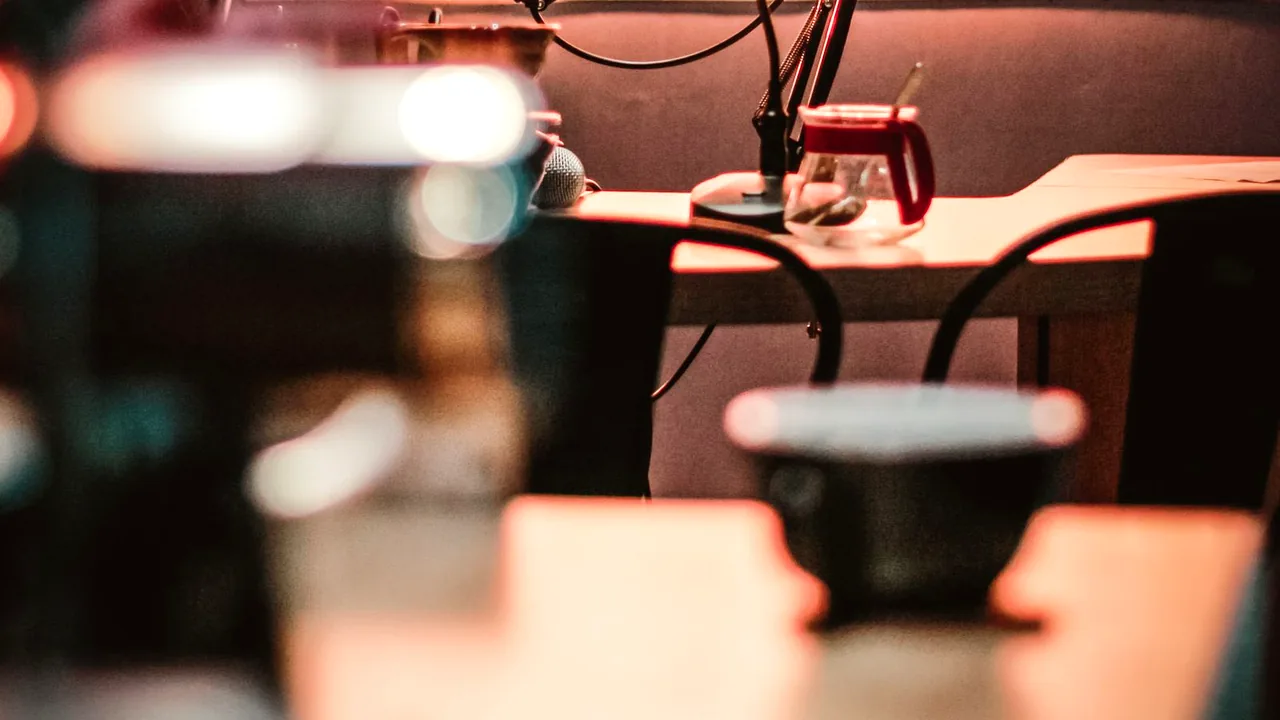
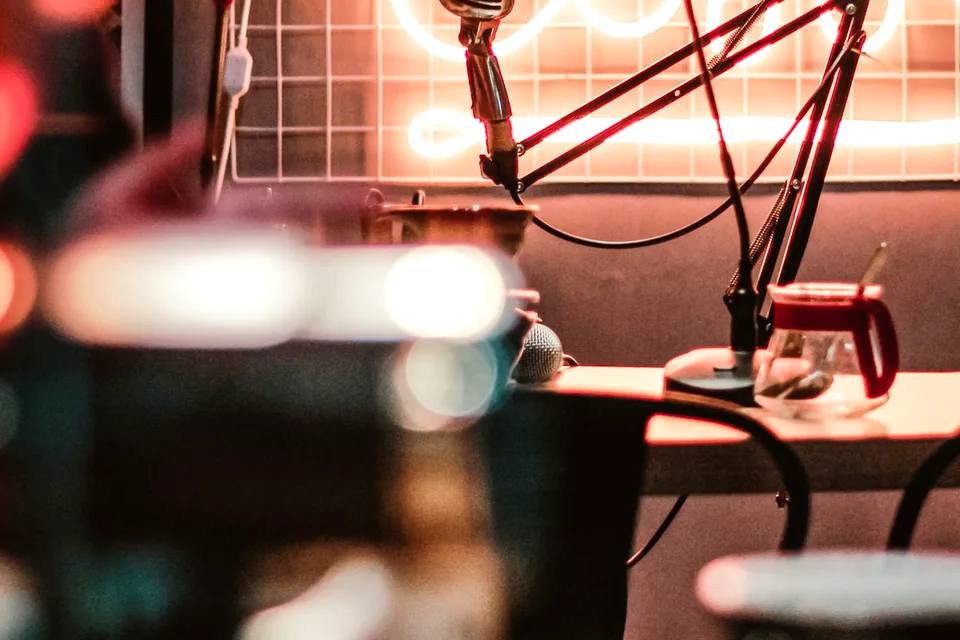
A private-room microphone setup: the closed door and your own mics are what make Korean karaoke feel different from a bar stage. Cover and body photos from Pexels (Pexels License), cropped; no brand signs in the final frames.
How do you search for English songs?
Most Seoul machines run systems from TJ Media or Kumyoung (금영), Korea's two main karaoke catalogues. (ref. 7; Peep note) Both hold large Korean libraries plus English, Japanese and Chinese tracks. The hard part is usually the keyboard, not the catalogue.5
On the remote or tablet:
Press 한/영 (Korean / English) so the on-screen keyboard shows Latin letters.5
Search by song title or artist name.
Highlight the track, then press 예약 to queue it, or 시작 to start at once.5, 6
Use 음정 or key arrows to raise or lower the pitch, and 취소 to stop a wrong pick.5
If a title will not resolve, search by artist instead, try a romanised K-pop title, or look up the TJ or Kumyoung song number on your phone before you go. (ref. 5, 7; Peep advice) TJ Media's own web search notes that some foreign titles are easier to find when typed in Hangul pronunciation.7
Q. Do machines show English lyrics? Popular English pop tracks usually do. For Korean songs, expect Hangul; some systems also show romanisation. (Peep observation)
Q. Is every Western hit available? No. Catalogues favour widely known pop, rock and musical numbers. Obscure deep cuts may be missing. Have two backup songs ready. (Peep advice)
How much does noraebang cost in Seoul?
There is no single citywide tariff. Independent English guides checked in 2026 put standard rooms roughly in the 15,000 to 30,000 won per hour band for the room, and coin booths around 500 won per song, with small bundles such as 1,000 won for a few songs or a few thousand won for about 30 minutes.5, 6 Evening and weekend rates in busy districts sit higher; quiet weekday afternoons sit lower. Always read the board at that branch.
Format
How you pay
Figures reported in 2026 guides
Good for
Last checked
Standard room (노래방)
By the hour, room rate
About 15,000 to 30,000 won per hour for the room5, 6
Groups, longer sessions, ordering snacks
6 Nov 2026
Coin booth (동전 노래방)
Per song or short time block
About 500 won per song; bundles near 1,000 won for a few songs, or a few thousand won for ~30 minutes5, 6
Solo or duo, quick stops
6 Nov 2026
"Service" time (서비스)
Free extra minutes after a paid hour
Discretionary; common off-peak, rare when the floor is full2, 5
Weekday or early evening rooms
6 Nov 2026
Visit Seoul notes that quieter venues are more likely to add free singing time.2 Do not demand it; if the timer keeps running after your paid hour, enjoy it. (Peep advice)
Cards are common at front desks in visitor areas, but some coin machines still prefer cash. For ATMs, cards and small notes, see money in Korea.
Q. Is the price per person? For a standard room, no. You split the room rate among whoever is singing.5
Q. Should I tip? No. Tipping is not expected at noraebang desks. (Peep observation)
Can you order food and drinks inside?
Many standard rooms let you order from a wall menu, tablet or room phone: soft drinks, bottled water, ramyeon, tteokbokki and similar snacks. Korea.net's honorary-reporter piece describes snacks and soju as a common part of the night at singing rooms that stock them.10
A venue licensed only as a singing practice hall (노래연습장) may not sell or serve alcohol under the Music Industry Promotion Act.8 Rooms that put soju on the menu are usually under a different licence, which can also change youth rules. Ask at the desk. If the desk will not sell alcohol, bring soft drinks only, or ask where the nearest convenience store is and check whether outside food is allowed. (Peep advice) Coin booths are usually snack-light: plan a short sing, then eat elsewhere.
Q. Can I bring outside food? Some rooms allow it; others do not. Ask at the desk before you unpack a convenience-store bag. (Peep advice)
Q. Is the room phone for ordering only? Often yes: press the call button, say the item number, and staff bring it in. Pay for food with the room bill or as you go, depending on the shop. (Peep observation)
What is the etiquette inside a noraebang?
Rotate the mic. Queue one or two songs each, cheer with the tambourine when you are not singing, and leave the volume at a level that does not rattle the next room. (ref. 5; Peep advice)
Practical habits that keep staff and friends happy:
Take turns. Filling the whole queue with your own list reads as rude in a group.5
Ask before joining a solo. Harmonies are fine when invited; jumping a verse uninvited is not.5
Use mic covers. Disposable foam covers are usually free; put a clean one on.5
Keep drinks off the machine. Spills kill remotes and tablets.6
Clean up lightly. Bin snack wrappers, put remotes back, and check for phones before you leave.6
No indoor smoking. Smoking indoors is banned; step out if the venue has a designated area.5
Q. How loud should I sing? Loud enough to enjoy it, not so loud that feedback squeals. Start the mic volume mid-way and nudge it up. (Peep advice)
Q. What about kids? Under Korea's Music Industry Promotion Act rules, singing practice halls may admit youths only from 09:00 to 22:00. Outside those hours, a parent or guardian must accompany them, give written entry consent, or another decree exception must apply.8, 9 Karaoke-style bars licensed as entertainment venues (유흥주점 / 단란주점) ban under-19s even with a guardian.11 Carry ID for age checks.
Quick FAQ
A noraebang is a private Korean singing room you rent for your own group, not a public karaoke stage.1, 4
The Hangul is 노래방, literally "song room", and the sealed door is the feature that makes shy singers comfortable on a first night in Seoul.
Say "noh-rae-bang", with stress on the middle syllable and a soft final "ng" sound.4
"Norebang" is the same word spelled more loosely in English. Front-desk staff in visitor areas will understand either version, so do not worry about a perfect accent on the first try.
No. Classic noraebang is a closed room with mics and a screen, not a bar stage where strangers watch you sing.1
Some venues sell drinks under their own licence, but the product you are buying is private singing time with your group.
Coin noraebang (동전 노래방) is a compact booth you pay by the song or a short time block.5, 6
It suits solo visitors and short stops between meals. You usually pay at a kiosk or inside the booth, then leave when credit ends.
Independent 2026 guides put standard rooms around 15,000 to 30,000 won per hour for the room, and coin songs near 500 won.5, 6
Boards vary by district and hour, so confirm the posted rate at that branch before you pay or insert coins.
Yes. Major machines carry substantial English catalogues alongside Korean and Japanese tracks.5, 7
Press 한/영 first so you can type Latin letters. If a title fails, search by artist name instead, or keep a second backup song ready before you start.
Search the title, highlight it, then press 예약 to add it to the queue, or 시작 to play it now.5, 6
Agree with friends before using any priority button that jumps the order, because that can cut someone else's turn.
Speaking Korean is optional. Group size on fingers, a pointed price board and the 한/영 button cover most first visits. (Peep advice)
A few words still help: "한 시간" for one hour, "연장" to extend, and "카드 돼요?" to ask if cards work.
Hongdae, Gangnam and Myeongdong have dense clusters of both hourly rooms and coin booths. (ref. 2, 3; Peep note)
Look for 노래방 signs on upper floors along the side streets. You do not need a famous brand for a solid first night.
Yes. Visitor districts see foreign guests every night, and English song search is built into modern remotes.2, 5
If the interface stalls, show staff the song title on your phone screen and they will often punch the number in for you.
No. Pay the posted room or song rate and leave when you are done. (Peep observation)
Round up only if you personally want to. Noraebang front desks do not run on a tip culture the way some Western bars do.
Yes. Coin booths are designed for one or two people, and standard rooms accept solo guests when a room is free.5
Solo evenings are normal practice time for K-pop fans who want to run through a set list without an audience.
서비스 is bonus minutes some rooms add after your paid hour, especially when the floor is quiet.2, 5
It is discretionary, not a right. Visit Seoul notes quieter places are more likely to add that free singing time.
Singing practice halls may admit under-19s only from 09:00 to 22:00 under the Music Industry Promotion Act. After 22:00, a parent or guardian must accompany them, give written entry consent, or another decree exception must apply.8, 9
Venues licensed as 유흥주점 or 단란주점 prohibit youth entry even with a guardian.11 Carry ID for night checks.
A venue licensed only as a singing practice hall (노래연습장) may not sell or serve alcohol under the Music Industry Promotion Act. Rooms that put soju on the menu usually hold a different licence, which can also change youth rules. Ask at the desk before you order. (ref. 8, 10; Peep note)
Ramyeon, tteokbokki, fries and other simple snacks are the usual items on a room wall menu. (ref. 10; Peep observation)
Share one or two dishes so the small room table stays clear for remotes, microphones and the tambourine during the next song.
One hour is enough for a group of four to rotate several songs each without rushing. (Peep advice)
Extend at the desk if the room is free and you still have energy. Coin booths work well for about 20 to 40 minutes.
Usually not. Walk in, wait a few minutes on busy weekend nights, and take the next free room.5
Large groups on busy Friday nights can call ahead if the shop posts a phone number on the street sign.
Bang (방) means room. Seoul's tourism site groups noraebang with other private-room pastimes such as PC rooms and jjimjilbang.1
It is social time outside a small family apartment, which is why closed singing rooms feel so normal to locals.
Call the desk on the room phone or walk out and ask for "연장" before the timer hits zero. (Peep advice)
Confirm the extra price first. Do not assume free service minutes will appear just because a weekday visit felt quiet.
Showing 5 of 20
Seoul Bang-Culture. Seoul Tourism Organization, Visit Seoul. Published 4 August 2015, edited 13 February 2019. Noraebang as hourly private singing room; bang (room) culture. Checked 6 November 2026. Link
Sing and Dance Like a Star at a Noraebang (Singing Room). Seoul Tourism Organization, Visit Seoul. Published 4 August 2015, edited 31 August 2023. After-dinner singing, free extra time tip, glass-front Hongdae rooms. Checked 6 November 2026. Link
Experience Korean Room Culture as Seen in K-Content. Korea Tourism Organization, VisitKorea. 17 October 2023. Room culture framing; Hongdae karaoke landmark details. Checked 6 November 2026. Link
노래방. Wiktionary. Etymology 노래 + 방; Revised Romanization noraebang. Checked 6 November 2026. Link
Noraebang in Korea: How Coin and Standard Karaoke Rooms Actually Work. Hanok Days (independent guide). Room vs coin formats, 2026 price bands, 한/영 search, service time, etiquette. Checked 6 November 2026. Link
Noraebang Guide 2026: How to Use a Korean Singing Room. Zuzu Korea Travel (independent guide). Walk-in flow, English mode, coin vs standard ranges, mic covers. Checked 6 November 2026. Link
반주곡 검색 (Accompaniment song search). TJ Media official. Notes on searching pop songs and Hangul pronunciation tips; catalogue provider for many machines. Checked 6 November 2026. Link
음악산업진흥에 관한 법률 제22조 (Music Industry Promotion Act, Article 22). Korean Law Information Center, law.go.kr. Singing-room operator duties on youth entry hours. Checked 6 November 2026. Link
음악산업진흥에 관한 법률 시행령 제8조 (Enforcement Decree Article 8). Youth entry hours defined as 09:00 to 22:00. Text via Govbrief scan of official decree wording, promulgation noted 7 October 2026. Checked 6 November 2026. Link
Noraebang: my exciting experience with Korean-style karaoke. Korea.net, Korean Culture and Information Service, 12 April 2023. "Song room" meaning; private soundproof rooms; snacks. Link
청소년 유해환경 개선 (Youth harmful environment improvement). Ministry of Gender Equality and Family. Lists 유흥주점 and 단란주점 as youth entry-and-employment banned businesses (청소년 출입·고용금지업소). Checked 6 November 2026. Link