Money in Korea for visitors in 2026: where foreign cards fail, Apple Pay and Google Pay, how much cash, Global ATMs, T-money top-ups and the Climate Card.
PK
Peep Korea Editorial · 14 min read
Short answer
Foreign Visa and Mastercard cards work in most Korean shops, but not at subway gates, not for plain T-money top-ups, and not at many street stalls, so carry some won in cash.1, 15, 16 Apple Pay works only where a shop has a contactless terminal, about a quarter of card merchants in early 2026; Google Wallet is not offered in Korea.4, 7 Load a T-money card with cash, or buy a Climate Card pass with a foreign card at Seoul Lines 1 to 8 machines for about a 3.7% fee, and spend your balance down before you fly.11, 13, 14
You tap your card at the subway gate. Red light. You try the machine next to it. It wants cash. The exchange booth is two exits away and closed for lunch.
Korea is one of the most card-friendly countries you will visit. That is the trap. The places that still want cash are exactly the ones a visitor hits on day one: the transit card machine, the street snack, the market stall. Plan for those and the rest is easy.
Do foreign credit cards work in Korea?
Yes, almost everywhere you shop, eat or sleep. VisitKorea notes that Visa, Mastercard, American Express and other cards are accepted at hotels, department stores and general shops, though some stores do not take them.1 Koreans themselves paid by credit card in 46.2% of transactions in a 2024 Bank of Korea survey, and in cash in only 15.9%.2
Where a foreign card tends to fail:
Subway gates and buses. You cannot tap a foreign card to ride, as of October 2026. Seoul plans card-tap gates on Lines 1 to 8 from 2027.16
Plain T-money top-ups. Station machines take only cash for those.15
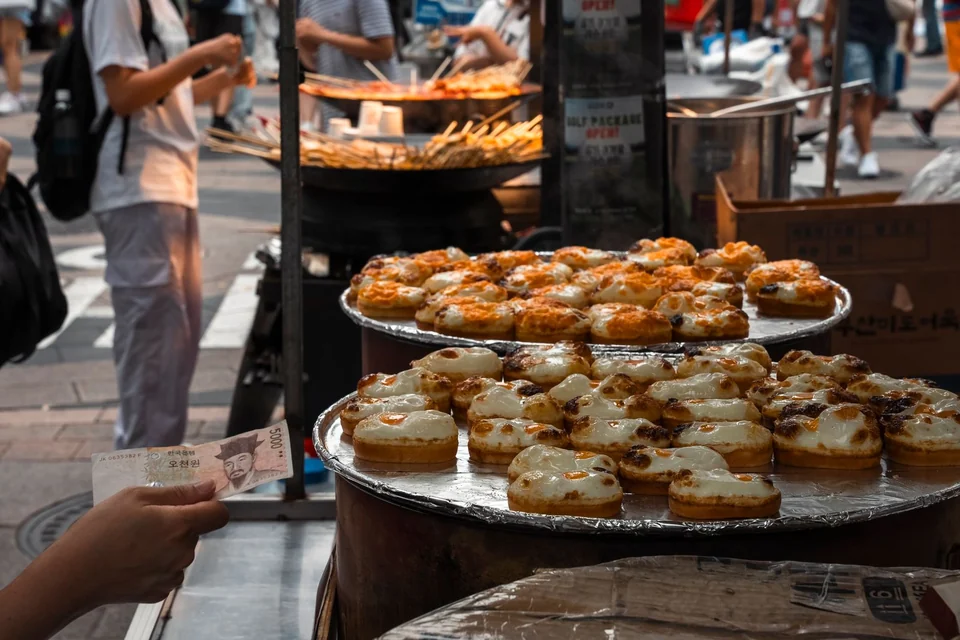
Street food, markets, small stalls. Small vendors are the most likely to want cash or a Korean transfer (our observation).
Some apps and websites. Many Korean services expect a Korean phone number, which is why Naver added passport verification for bookings and payments in Naver Map in June 2026.17
Before you fly, tell your bank you are traveling and check its foreign transaction fee. A card that charges 3% on every purchase adds up over a week.
Q. Visa or Mastercard? Carry one of each if you can. Some apps and machines accept one network but not the other (see the Apple Pay section), and a second card saves a dead end.
Q. Should I pay in my home currency when the machine asks? No, choose won. Billing in your home currency is dynamic currency conversion, which uses the merchant's or ATM's exchange rate plus any fees. Visa requires the screen to show both amounts and the rate, and to let you decline.10
Does Apple Pay work in Korea?
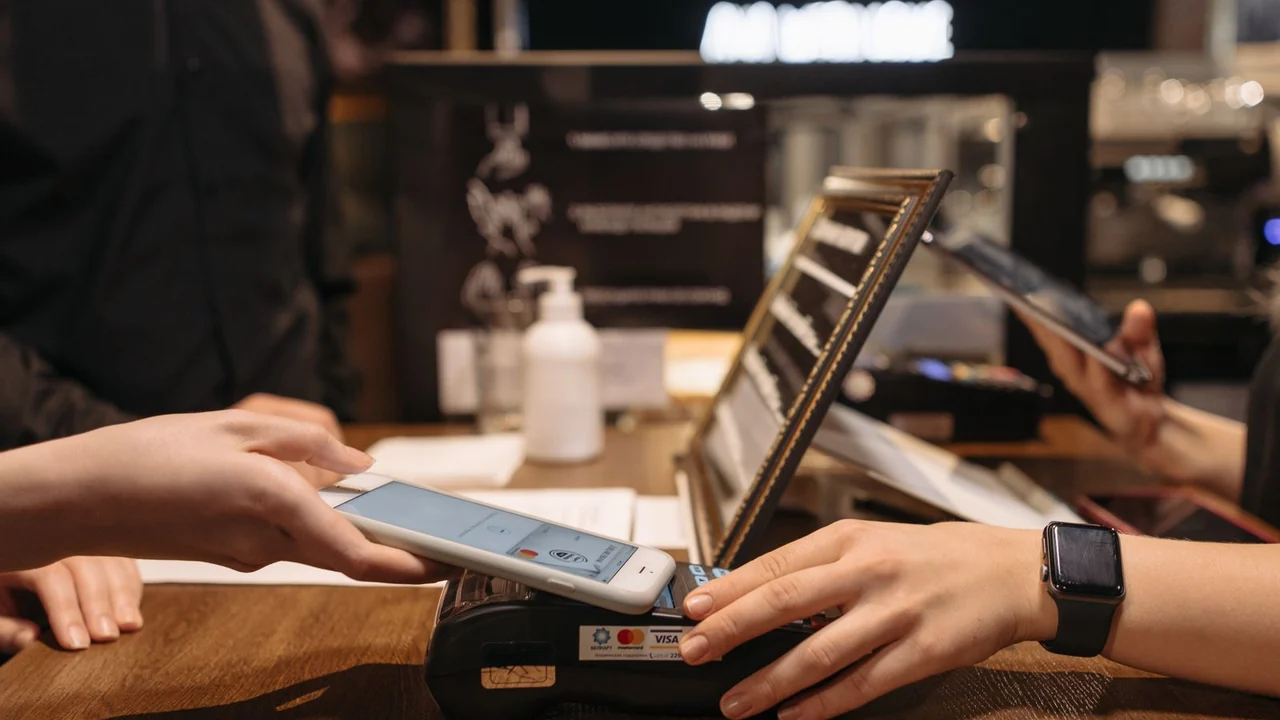
Sometimes. Apple Pay needs a contactless (NFC) terminal and a terminal that accepts your card's network.3 In the first quarter of 2026, about 25% of card merchants in Korea could take Apple Pay: over 60% of convenience stores, cafes and big supermarkets, but only about 6% of small shops.4
Merchant shares from a September 2026 report on first-quarter data. Not a Peep endorsement of any payment service.
Transit is the bright spot for iPhones. Since 18 March 2026, the Mobile Tmoney app lets visitors sign in with a "Foreigner" button and top up with cards issued outside Korea; at launch it accepted Mastercard, American Express and UnionPay, not Visa.5 Mastercard announced the same service in April 2026: add MobileTmoney to Apple Wallet, top up with a Mastercard, then tap your iPhone or Apple Watch on subways, buses and taxis.6
Q. Can I top up the Tmoney card inside Apple Wallet with my foreign card? Not inside the Wallet app itself: as of March 2026 it took top-ups only from Korean Hyundai Card cards. Use the Mobile Tmoney app instead.5
Does Google Pay work in Korea?
Not as a Korean service. South Korea is not on Google's list of countries where Google Wallet and tap to pay are available.7 A foreign card saved in Google Wallet may still work at a contactless terminal that takes your network, but test it on a small purchase first (our reading, not a Google promise).
For Android transit, Tmoney's KOREA TOUR CARD app turns an NFC phone into a transit card. Its store listing says you can charge and refund with Mastercard, Visa, American Express, JCB or UnionPay cards.8 Some reviews on the store page report top-up problems, so keep a physical card as backup.
Q. Which is safer to rely on, my phone or a plastic card? The plastic card. A phone battery dies, an app logs out. A 3,000 won T-money card in your wallet keeps working.
How much cash should I bring to Korea?
A little, in won. For a week in Seoul, about 50,000 to 100,000 won in cash covers transit card top-ups, street food and the odd cash-only stall (our planning estimate). Everything else goes on the card.
Korean banknotes come in 1,000, 5,000, 10,000 and 50,000 won; coins in 10, 50, 100 and 500 won.1 Ask for 10,000 won notes. A 50,000 won note is awkward at a snack stall.
Carrying a large sum for a treatment is a different matter. Over US$10,000 in total must be declared on arrival; the rule sits in our Korea entry requirements guide. Ask your clinic how it takes payment before you travel, rather than flying with it in cash.
Q. Should I exchange money before I leave home? Only a little, if at all. You can withdraw won on arrival at a Global ATM, and Korean banks and certified exchange booths change major currencies.9
Where can I exchange money in Korea?
At a bank, a government-certified exchange booth, or a foreign-currency kiosk. Banks generally open 9 a.m. to 4 p.m. on weekdays.1 Certified booths, common in tourist areas, display a "Certified" sign with currency symbols; Visit Seoul advises avoiding uncertified ones.9
Banks. Visit Seoul says they usually give travelers the most favorable rates.9 Weekday hours only.
Certified booths. Evenings and weekends in places like Myeongdong. Compare the posted rate before you hand over cash.
Foreigner prepaid cards with kiosks. Cards such as WOWPASS let you load won or foreign currency at kiosks and spend like a debit card; you need your passport to buy one.12 A factual mention, not a recommendation.
Q. Is the airport rate worse? Exchange counters at the airport are convenient, and convenience has a price. Change only what you need for the first day, then compare in the city (our advice).
Which ATMs take foreign cards in Korea?
Look for a "Global" sign or your card network's logo on the machine.9 Most ATMs offer English menus, and many run until 11 p.m. or around the clock. Convenience store ATMs are everywhere but often charge higher fees.9
A quick routine at the machine:
Choose the English menu and "foreign card" if offered.
Withdraw a sensible sum in one go. Each withdrawal can add a Korean ATM fee and your own bank's fee.
When the screen offers to bill you in your home currency, choose won.10
Use a debit card, not a credit card, if your bank treats ATM withdrawals on credit as a cash advance with interest from day one (check your own card's terms).
Q. The ATM rejected my card. Is my card blocked? Not necessarily. Only machines with the Global sign or your network's logo are set up for foreign cards.9 Try one of those, and a second card, before you call your bank.
How do I buy and top up a T-money card?
Buy one at a convenience store or a station information center for 3,000 to 5,000 won, then load it.12 Plain T-money top-ups are cash in won, from 1,000 to 90,000 won at a time in 1,000 won steps, with a maximum balance of 500,000 won.11 Station machines will not load plain T-money with a credit card.15
Card rules from Tmoney, VisitKorea and the Seoul Metropolitan Government, checked 26 October 2026. Not a Peep endorsement of any card or app.
Riding itself, from reading the map to exits and taxis, is in our Seoul transit guide.
Q. Can I pay for a taxi with T-money? Yes, T-money works in taxis.12 Handy at night, when you do not want to fumble for notes.
Climate Card or T-money: which is cheaper for a Seoul trip?
The Climate Card short-term pass, if you ride a lot inside Seoul. It costs 5,000 won for 1 day, 8,000 for 2, 10,000 for 3, 15,000 for 5 and 20,000 won for 7 days, plus 3,000 won for the physical card.13 With an adult subway ride at 1,550 won on T-money, the 3-day pass pays off at about seven rides (our arithmetic).
Since 17 March 2026, you can buy the card and load short-term passes with a foreign Visa or Mastercard at 440 new machines in 273 stations on Lines 1 to 8, for a service fee of about 3.7%.14
The fine print that catches visitors:
The pass starts on the day you load it. You cannot load it in advance.13
From 1 October 2026 it covers Seoul only: not the Shinbundang Line, GTX, stations outside Seoul, or express and airport buses.12, 13
You can ride it to Incheon Airport and get off there, but not board at the airport.13
The 30-day Climate Card has ended for new top-ups; short-term passes continue.12, 13
Refunds for visitors without a Korean bank account mean a visit to Tmoney headquarters. Buy only the days you need.13
Q. I am staying in Gangnam and my clinic is near Sinsa. Does the Climate Card help? Partly. Line 3 is covered, but the Shinbundang Line between Gangnam and Sinsa is not.13 If that line is your daily ride, plain T-money is simpler.
How do I get my T-money balance back before I fly?
Ask at a convenience store or a T-money top-up point; they refund the balance in cash, minus a 500 won fee, and the price of the card itself is not refunded.11 Balances over 50,000 won can only be refunded at Tmoney Town near Seoul Station exit 10.12
The easier plan is to arrive at the airport with almost nothing left. Top up in small amounts in your last days, then spend the rest on a coffee or a snack at a store that takes T-money.
Q. Can I get a refund on a Climate Card pass? Only before the pass period ends, after a 500 won fee and what you have already ridden; without a Korean account, the refund means a trip to Tmoney headquarters.13
How do I pay a clinic deposit or a pharmacy bill in Korea?
By card, in most cases, but ask the clinic in writing before you travel: which cards it accepts, whether the deposit can be paid from abroad, and whether VAT is already inside the won price. Our guide to foreigner pricing at Korean clinics covers quotes and deposits, and our cost guide explains why foreign visitors can no longer claim VAT back on cosmetic procedures; the refund covered treatment up to the end of 2025.
Practical points for the money side:
Card limits. A large payment can hit your card's daily limit. Call your bank before the procedure day and ask it to expect a big charge from Korea.
Currency. Pay in won and decline the home-currency offer at the terminal.10
Receipts. Keep the itemized receipt in Korean and English if offered; you may need it for your own records or insurer at home.
Shopping tax refunds are a separate system; our Olive Young guide covers them.
Q. Can I pay a clinic with a foreign card? Usually, but confirm the network and any limit in advance. A refused card at the front desk is a stressful way to start a procedure day.
Quick FAQ
Yes, at most hotels, department stores, restaurants and shops.1
Expect trouble at subway gates, plain T-money top-ups and small stalls.15, 16
Not as of October 2026. Seoul plans card-tap gates on Lines 1 to 8 from 2027.16
Use T-money, a Climate Card pass or a single-journey ticket for now.
Where the shop has a contactless terminal that takes your card's network.3
About 25% of card merchants could take Apple Pay in early 2026, much more often in convenience stores and cafes.4
Yes, through the Mobile Tmoney app topped up with a foreign Mastercard, Amex or UnionPay card.5, 6
Visa was not accepted at launch in March 2026.5
Google Wallet is not offered in South Korea.7
On Android, the KOREA TOUR CARD app is the transit option that takes foreign cards.8
About 50,000 to 100,000 won for a week covers top-ups and snacks (our estimate).
Use cards for the rest.
Nearly. Koreans paid cash in 15.9% of transactions in a 2024 Bank of Korea survey.2
Visitors still need cash for T-money top-ups and some stalls.
Banks usually offer travelers the most favorable rates, on weekdays.9
Outside bank hours, use a booth with the government "Certified" sign.9
Machines with a "Global" sign or your network's logo.9
Convenience store ATMs work but often charge more.9
Won. The home-currency option uses the machine's rate plus fees.10
3,000 to 5,000 won for the card, sold at convenience stores.12
You load the fare money separately.
Not a plain T-money card at station machines; that takes cash.11, 15
Mobile T-money apps accept some foreign cards.5, 8
At a convenience store or top-up point, in cash, minus a 500 won fee.11
Over 50,000 won, only at Tmoney Town near Seoul Station.12
If you ride often inside Seoul. The 3-day pass is 10,000 won, about seven subway rides.13
Not for the Shinbundang Line or airport buses.13
Yes, at 440 machines on Seoul Lines 1 to 8 since 17 March 2026, with about a 3.7% fee.14
Not for boarding there. You can ride it to the airport and get off.13
A foreigner-only prepaid card for transport and shopping that you load at kiosks, in won or foreign currency.12
You need your passport to buy one.
Yes, over US$10,000 in total. Our entry guide has the details.
Usually, but confirm the network, any limit and whether VAT is included before you travel.
Our clinic pricing guide covers deposits.
No. That refund only covered treatment received by the end of 2025. Our cost guide explains the change.
Shopping tax refunds still exist; see our Olive Young guide.
Showing 5 of 20
Korean Currency & Exchange Info: Korean Currency. VisitKorea (Korea Tourism Organization). Checked 26 October 2026. Link
한국인 대표 지급수단은 신용카드 (Credit cards are Koreans' main payment method; Bank of Korea 2024 payment survey). Yonhap News, 25 March 2025 (in Korean). Link
Apple Pay 사용처 알아보기 (Where you can use Apple Pay). Apple Support (Korea). Checked 26 October 2026 (in Korean). Link
애플페이, 단말기 확대…현대카드 독주 언제까지? (Apple Pay terminals expand). Straight News, 1 September 2026 (in Korean). Link
Apple Pay Tmoney allows foreigners, tourists to ride using iPhones. Korea JoongAng Daily, 19 March 2026. Link
Mastercard Makes Getting Around Korea Easier for International Travelers with iPhone. Mastercard Newsroom, 9 April 2026. Link
Supported countries for Google Wallet & tap to pay. Google Wallet Help. Checked 26 October 2026. Link
KOREA TOUR CARD Tmoney. Google Play store listing, Tmoney Co. Checked 26 October 2026. Link
Money. Visit Seoul, the Official Travel Guide to Seoul (Seoul Tourism Organization), edited 14 March 2019. Link
What you should know about Dynamic Currency Conversion. Visa. Checked 26 October 2026. Link
Foreigner Guide (purchase, top-up and refund). Tmoney. Checked 26 October 2026. Link
Transportation Cards. VisitKorea (Korea Tourism Organization), page updated August 2026. Link
Climate Card. Seoul Metropolitan Government. Checked 26 October 2026. Link
Climate Cards and Single-Journey Transit Tickets Now Accepting International Credit Cards, No Cash Needed. Seoul Metropolitan Government, 17 March 2026. Link
지하철역 키오스크에서 신용/체크카드로 충전할 수 있나요? (Can I top up with a credit or debit card at station kiosks?). Seoul Metropolitan Government FAQ, updated 30 September 2026 (in Korean). Link
Seoul Implements Open-Loop Payments for International Tourists. Seoul Metropolitan Government, 24 October 2025. Link
NAVER Introduces Passport Verification to Make Travel in Korea Easier for Foreign Visitors. NAVER Corp. press release, 9 June 2026. Link