Korean skin habits are mostly sunscreen, gentle care and routine dermatology, not genes or twelve steps. Why viral glass skin videos backfire, and where a Seoul visit fits.
PK
Peep Korea Editorial · 13 min read
Short answer
Koreans do not share a skin gene or a secret 12-step routine. What shows on many Korean faces is habit: sunscreen as a daily product, gentle cleansing, moisture and barrier care, and dermatology visits treated as maintenance, so "glass skin" is a look of clear, even, hydrated skin, not a product or a step count.
The routine that went viral is rarely the routine that made the skin.
A sixty-second clip shows eleven bottles. Acid toner, vitamin C, retinol, niacinamide. All on one face, all tonight. You copy it on Sunday. By Wednesday your cheeks sting under plain water. Whatever made the creator's skin look like that happened off camera: the sunscreen at noon, the skin she started with, the dermatology visit down the street that never made the edit.
If you remember one test, remember this. Count the actives, not the steps. If a routine puts an exfoliating acid, a retinoid and a strong vitamin C on the same face on the same night, it is not a glass skin routine. It is a barrier test.
What is glass skin, really?
Glass skin is a description. It means skin that looks clear, even in tone and well hydrated, so light sits on it smoothly. The EADV researchers used nearly the same words: clear, smooth and deeply hydrated.1
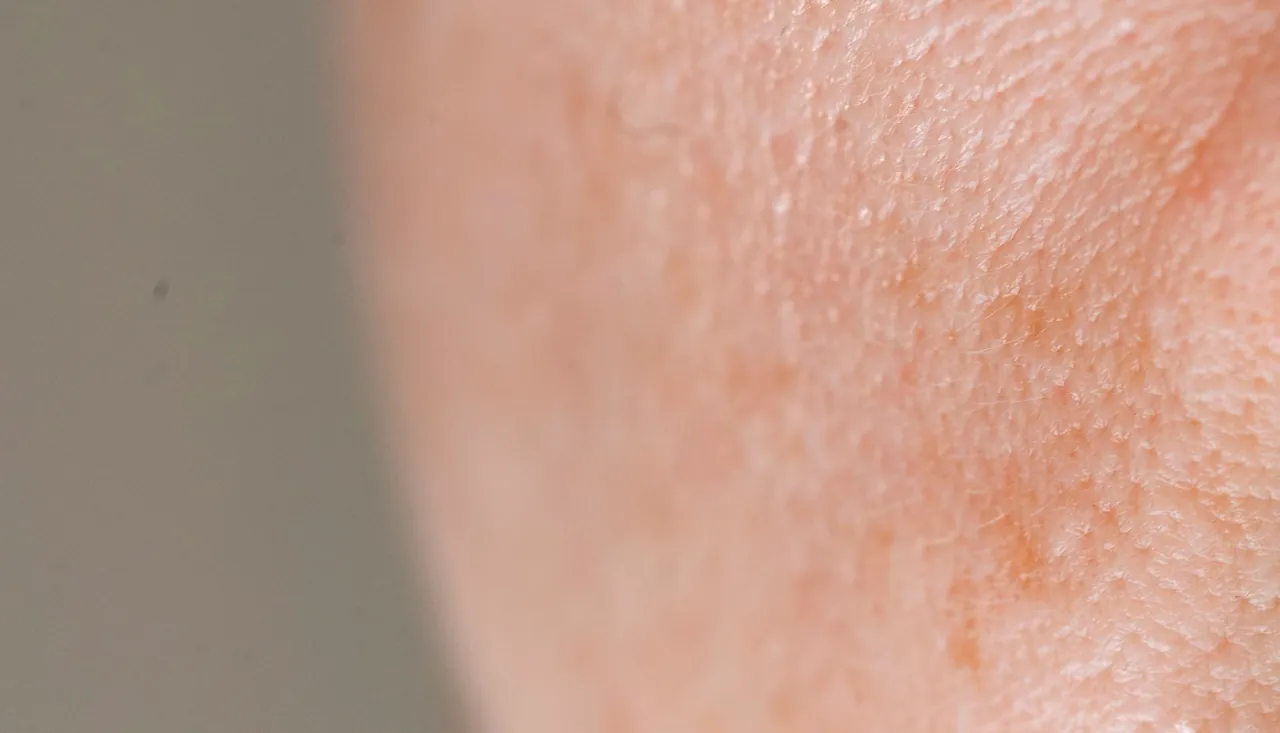
It does not mean poreless. Every face has pores, including the ones on your feed. Ring lights, makeup and filters do the rest.
That matters because a look cannot be bought in one bottle. A serum can help with hydration. A clinic can treat spots, redness or texture. Nobody can sell you "glass" as an ingredient. Injectable glass menus have their own page, our skin booster guide. Facials have theirs, the Aqua Peel guide.
Real skin in daylight, pores visible. Not a product recommendation; results vary.
Why do Koreans have good skin?
The tempting answer is genes. You cannot copy that, and it is not where the research points. In a Korean study of 407 adults, sun exposure and smoking were each linked to worse wrinkles, and pigment changes were a major sign of sun damage too.10 Korean skin ages in the sun like any other skin. The difference is what people do about it.
Four habits do most of the work.
Sun avoidance is ordinary. Long sleeves, parasols and shade are a traditional habit in Korea and its neighbors, as dermatology research notes.9 Sunscreen is treated as a daily product, not a beach product. That is exactly the AAD's advice: every day, broad spectrum, SPF 30 or higher.8 Why Korean sunscreens feel lighter is its own story, covered here.
Spots are the target, early. In Asian skin, sun damage often shows as uneven pigment alongside wrinkles.9, 10 So the culture aims at prevention. Protect first, treat early, keep tone even. Melasma, the stubborn version, has its own guide.
Products are regulated by function. In Korea, products sold as aiding brightening (the official word is whitening), wrinkle improvement or UV protection are "functional cosmetics." Each must be reviewed by, or reported to, the Ministry of Food and Drug Safety (MFDS) for safety and effectiveness, and sunscreens need SPF and PA data.11 The claim on the label has paperwork behind it.
A dermatologist is routine, not a crisis. In Seoul, a skin clinic visit is an ordinary errand. Visitors use them too: 62.9% of the 2.01 million foreign patients Korea counted in 2025 came for dermatology, and so did 44.3% of American patients.12
What the clip credits
What does the work
What the research found
Twelve steps every night
Three to five steps that suit your skin type
84% of reviewed glass skin videos ignored skin type1, 3
Acids, retinol and vitamin C stacked
One active at a time, added slowly
63% of patients with reactions used more than three actives2
None of the 38 videos was made by a dermatologist1
Genes
Behavior: sun, smoking, care
Sun and smoking were risk factors for wrinkles in Korean adults10
Figures from EADV Congress 2026 presentations and the cited studies. Not a product or clinic recommendation.
Glass skin routine: what it actually needs
A routine that would look normal in Seoul is short. Morning: a gentle cleanse or plain water, a moisturizer that suits your skin, sunscreen. Night: wash off sunscreen and makeup, moisturize, and use one active at most.
The AAD's advice lines up. Match products to your skin type. Wash gently with your fingertips, not a scrub.8 Exfoliate for your skin type, and less often the stronger the method. If you already use a retinoid, retinol or benzoyl peroxide, exfoliating as well can worsen dryness or acne. Darker skin tones should avoid strong exfoliation, because it can leave dark spots.5
Retinoids want patience. Start with the gentlest formula, every other night, at night only, with sun protection by day. Skip them in pregnancy.6
Order is simple: thinnest texture first, thickest last, sunscreen after everything else in the morning.4 Add one new product at a time and test it first: a quarter-sized spot on the inner arm, twice a day for seven to ten days.7 Add three things on one night, break out on Thursday, and you will never know which one did it.
Shopping in Seoul? The Olive Young guide covers what to buy and what can wait.
Why do viral glass skin routines backfire?
A study presented at the EADV Congress 2026 in Vienna reviewed 38 viral TikTok videos on Korean skincare and glass skin, found in May 2026 with a fresh account. 94.7% had at least one misleading claim. 84% ignored skin type. 45% pushed stacked actives without safety guidance. 32% promised instant results.1, 3 One video mentioned irritation. Two mentioned sun protection. None was made by a dermatologist, and none suggested seeing one.1
A second EADV study looked at the other end: 94 patients whose skin got worse after products promoted on social media. Exfoliating acids (AHA or BHA) were involved in 34%, over-the-counter retinoids in 27%, vitamin C serums in 14% and niacinamide in 11%. Nearly half had copied a whole routine, and 63% were using more than three actives at once. Irritant contact dermatitis was the most common reaction, at 42%, followed by acne, rosacea flares, dark spots and superficial chemical burns.2
Read those numbers fairly. These were congress presentations, the video sample was small, and the patient study only counted people who already had a problem. The researchers were clear that Korean skincare itself is not the problem. The problem is gentle principles flattened into one routine for everyone.1, 2
The AAD sees the same pattern. Overused exfoliators can damage the skin barrier, and skin can start reacting to products it used to tolerate.4
How to read a skincare TikTok
Six checks before you copy anything:
Skin type. Does it say who it is for? No answer means it is for the creator.
Actives per night. An acid, a retinoid and a strong vitamin C on one night is a red flag. Most patients in the EADV reaction study used more than three actives.2
Timeline. A glow promised by tonight is a claim, not an outcome.
Maker. Brand, influencer or dermatologist? Look for a gifted or paid tag.
Safety lines. Does it mention sunscreen or irritation? Most of the studied videos did not.1
One product. Can you try one thing from it, patch tested, for a few weeks? Then do only that.
Where a Seoul clinic visit fits
If you are flying in, a dermatology visit does the one thing a video cannot. It looks at your skin, not the creator's. Book it for a problem you can name: redness, acne, spots, texture, a face that stings since you changed routines.
Bring photos of every product label, in the order you use them. The most useful sentence a Seoul doctor can say may be "stop these two."
Send the complaint, not the trend. "Combination skin, stinging since I added an acid toner and retinol, in Seoul five days" can be booked. "I want glass skin" cannot.
Quick FAQ
Not in a way you can use. Skin type and tone are inherited, but in Korean adults, sun exposure and smoking were independent risk factors for wrinkles, as they are elsewhere.10 What people notice on Korean faces is mostly habit: sun avoidance, daily sunscreen and early care. Those habits travel. Genes do not.
Some people enjoy long routines; many keep it short on workdays. Step counts are a content format, not a Korean rule. A short routine you repeat daily, with sunscreen every morning, does more than twelve steps you abandon in two weeks.
Thinnest to thickest. Cleanse, then watery layers such as a toner or essence if you use them, then serum, then moisturizer, then sunscreen in the morning. Actives such as a retinoid belong at night.6 If a step stings, drop it before adding another.
Three can be enough: a gentle cleanser, a moisturizer for your skin type and sunscreen. Add one targeted product only when you have a reason, such as spots, acne or fine lines. The AAD's core advice is daily sunscreen and products that match your skin.8 The rest is optional.
Not on the same night if you are new to either. The AAD notes that exfoliating while using a retinoid or retinol can worsen dryness or acne, and that retinoids should start low, every other night.5, 6 In the EADV patient study, acids and over-the-counter retinoids were the two products most often implicated in reactions.2
Many people tolerate both, but tolerance is personal. Vitamin C serums and niacinamide each appeared in reactions in the EADV patient study, where 63% of patients were using more than three actives at once.2 Add one, wait a couple of weeks, then add the other. If your face stings, the routine is telling you something the video did not.
Common signs are stinging from a plain moisturizer, tightness, redness, flaking and new breakouts. Products you have used for years may suddenly burn. The AAD warns that overused exfoliators can damage the barrier and leave skin raw and reactive.4 If it is severe or does not settle, see a dermatologist.
Stop the acids, scrubs and retinoids for now. Keep only a mild cleanser, a simple moisturizer and sunscreen. Give it weeks, not days, then bring back one active at a time. If your skin stays red or burning, see a board-certified dermatologist instead of adding a rescue serum.4, 8
It can look calmer and more even, but acne is a medical condition first. Scrubbing irritates skin and can worsen acne.8 Acne onset or worsening made up 28% of reactions in the EADV patient study.2 A dermatologist can choose one plan instead of five products.
The principles do: gentle care, moisture and daily sunscreen. The risks differ. The AAD advises people with darker skin tones to avoid strong chemical or mechanical exfoliation, because it can leave dark spots.5 Post-inflammatory hyperpigmentation was 11% of reactions in the EADV patient study.2 Go slower, not harder.
It is built around prevention, light textures people will wear daily, and a regulator that reviews functional claims such as UV protection and wrinkle improvement.11 Daily sunscreen and easy access to dermatology do the rest. It is not magic. The habits are the part you can take home.
Mostly in the rules and the habits. Korea reviews some claims as functional cosmetics, while the US regulates sunscreen as an over-the-counter drug, which is one reason the filters differ. Our sunscreen comparison explains it. Your routine matters more than the country on the label.
No. Some carry sensible ideas, such as gentle cleansing and moisture. But in the EADV review, 94.7% of the videos had at least one misleading claim, and none cited a source.1, 3 Treat them as inspiration, not instructions. Check skin type, actives and sunscreen before you copy anything.
Slower than a video. Test each new product for seven to ten days first.7 The AAD says it takes at least 30 days to know whether a product is working, so change one thing at a time.4 A routine that promises glass skin by morning is making the instant-result claim the EADV researchers flagged.1
Not one treatment. Clinics treat specific things: pigment, redness, texture, dehydration, acne scars. Facials, boosters, PDRN and lasers are different tools, and the skin treatments overview sorts them. A clinic that sells "glass skin" as a package before examining you is selling a word.
It can be, if you go early in the trip with a clear question. A doctor can look at your skin, tell you what to stop and suggest a plan to continue at home. Leave spare days after any laser or peel before you fly.
Photos of every product you use, ingredient lists included, in order. A list of medicines, including isotretinoin, and any allergies. Note when the reaction started and what you changed just before it. Ask for written instructions in English, including which products to pause.
Better not. Skin irritated by new actives is a poor base for a laser or peel, and many clinics ask you to pause retinoids and acids around treatment. Keep your routine boring that week. Our aftercare guide covers the days after.
None on their own. Peep does not recommend products, and no bottle replaces sunscreen, gentle care and time. If you shop in Seoul, pick three products you will finish, patch test each, and add one thing at a time. The Olive Young guide covers the shopping side.
Yes. The basics are the same: gentle cleansing, moisturizer and daily sunscreen.8 Shaving already stresses the skin, so stacking acids as well can backfire sooner. Razor bumps or lasting redness are a dermatology question, not a step count.
Showing 5 of 20
Medical note
This article is for general education and is not medical advice, a diagnosis, or a promise of outcome. This guide lists no prices. Ingredients, products and treatments are named to explain categories, not to endorse a brand or a clinic. If you are pregnant, have eczema, rosacea or acne, or use prescription skin medicine, speak to a qualified clinician before adding active ingredients.
Paysano ML, Talah BAD, Elias MC, Kreuz M. Glass Skin or Barrier Breakdown? Evaluating the Quality and Safety of Viral Korean Skincare Routines on TikTok. EADV Congress 2026, Vienna, 30 September to 3 October 2026. Reported in the EADV press release of 30 September 2026. Link
Hormi O, El Yamani L, Moujahid S, Denna S, Zerrouki N, Zizi N. When skincare trends go wrong: Dermatologic complications of viral social media products. EADV Congress 2026, Vienna. Reported in the same EADV press release. Link
Grasso GM. Most viral Korean 'glass skin' videos on TikTok include misleading claims.Healio Dermatology, October 7, 2026. Coverage of the EADV Congress 2026 abstract. Link
Dermatologist-recommended skin care for your 20s. American Academy of Dermatology. Link
How to safely exfoliate at home. American Academy of Dermatology. Link
Retinoid or retinol? American Academy of Dermatology. Link
How to test skin care products. American Academy of Dermatology. Link
10 skin care secrets for healthier-looking skin. American Academy of Dermatology. Link
Chung JH. Photoaging in Asians.Photodermatology, Photoimmunology & Photomedicine, 2003. PubMed
Chung JH, Lee SH, Youn CS, et al. Cutaneous photodamage in Koreans: influence of sex, sun exposure, smoking, and skin color.Archives of Dermatology, 2001. PubMed
Cosmetics: approval process for functional cosmetics. Ministry of Food and Drug Safety (MFDS), Korea. Link
Ministry of Health and Welfare. Press release on 2025 foreign patients. 24 April 2026 (in Korean). Link