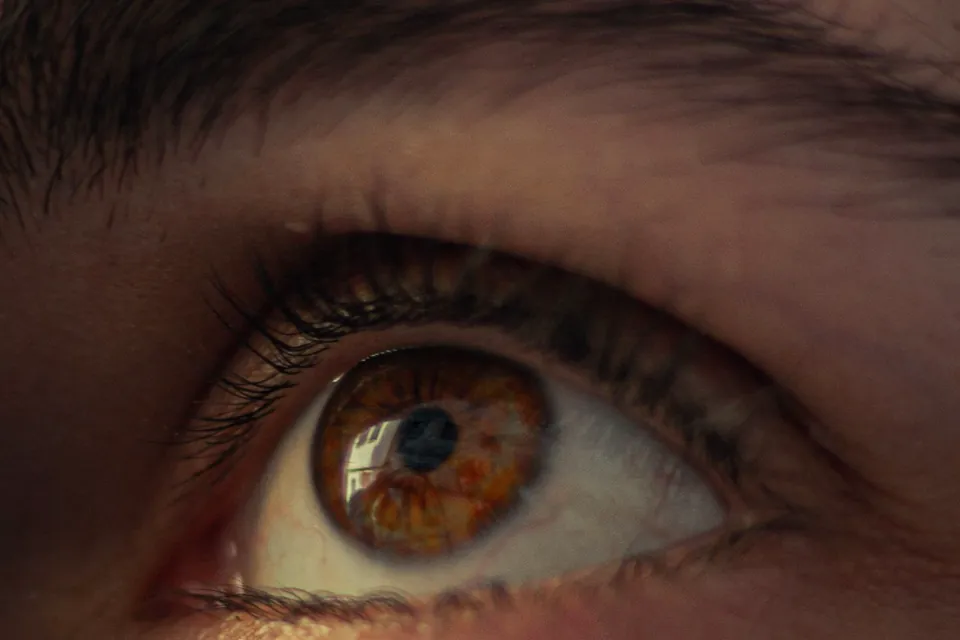
Epicanthoplasty, lateral and lower canthoplasty, canthopexy and fox eye in Korea: which corner each one moves, scar and revision risks, recovery and trip timing.
PK
Peep Korea Editorial · 14 min read
Short answer
Epicanthoplasty (앞트임) opens the inner corner, lateral canthoplasty (뒤트임) moves the outer corner, and lower canthoplasty (밑트임) lowers the outer part of the lower lid.1, 5, 6 The Korean outer-corner version usually makes the eye longer and slightly less slanted, the opposite of a fox eye, which lifts.1, 12 Before you pay, get in writing which corner, which direction, how many millimeters and the revision plan; this guide prints no Seoul prices.
Take one question into the consult: "Which corner is the problem on my face, and which way will it move?" If the answer is "all three, a bit," ask again.
What is the difference between epicanthoplasty, lateral canthoplasty and canthopexy?
They work on different corners and move them in different directions. Epicanthoplasty changes the skin fold over the inner corner. Lateral canthoplasty cuts and re-anchors the outer corner. Canthopexy only tightens the outer corner with sutures, without cutting the tendon.1, 12, 13
Name on a Seoul menu
Corner
What it moves
Usual goal
앞트임 (epicanthoplasty)
Inner
The skin web over the pink inner corner
Eye looks longer toward the nose
뒤트임 (lateral canthoplasty)
Outer
The outer corner, released and re-fixed further out
Support, small lift, often with lower lid surgery12, 13
"Fox eye"
Brow, temple, sometimes outer corner
Brow tail and skin pulled up and out
Lifted, almond look
Q. Why does the same word mean opposite things? In the US, canthoplasty is often called "cat eye surgery" because it lifts the outer corner.12 In Korea, cosmetic lateral canthoplasty is usually done to lengthen the eye and lower its slant, because an upward slant can make the eye look smaller and sharper.1 Same surgery name. Opposite brief.
Which corner is actually making my eye look small?
Often only one, and the fix depends on which. Look straight into a mirror in daylight, no makeup, and check each corner separately. Then let a surgeon measure; this is a conversation starter, not a diagnosis.
Inner corner: Is a skin fold covering the pink tissue next to your nose? That fold is the epicanthal fold, and it is what 앞트임 changes.6 No visible fold, little to gain.
Outer corner: How much room sits between the outer corner and the bone beside it? Surgeons measure this distance and the slant before cosmetic lateral canthoplasty, because that space limits how far the corner can move.1
Lower lid: Does the lower lid sit high on the colored part of the eye? That is the zone 밑트임 targets.5
Upper lid: Does the lid cover part of the pupil? That is a crease or muscle question, not a corner question. Our double eyelid guide covers ptosis and creases, and the upper eyelid guide covers heavy skin and a low brow.
Q. Can a corner fix a droopy lid? No. If the lid sits low over the pupil, a longer eye can still look tired. Sort the lid first.
The outer corner is where 뒤트임 and canthopexy work. Ask how much room your face has there.
Is a fox eye lift the same as eye-corner surgery?
Usually not. "Fox eye" is a look, not one operation. It can be a thread lift that pulls the brow tail and temple up, a toxin brow lift, an outer-corner lift such as canthopexy, or a mix.12, 16
Quick decoder:
Fox eye vs cat eye: In US usage, "cat eye surgery" usually means a canthoplasty that lengthens and lifts the outer corner.12 "Fox eye" more often means lifting the brow tail and temple, so the eye looks pulled up from outside.
Fox eye vs brow lift: A brow lift moves the eyebrow. It does not change where the eyelids meet. If the corner itself is your problem, a brow lift is the wrong tool.
Fox eye with Botox: Toxin can relax muscles that pull the brow down, so the brow lifts a little. The effect lasts about three to six months.16 Our Botox guide explains what Seoul menus mean by the word.
Fox eye thread lift: Threads under the temple skin. Extrusion, infection, swelling, pain and an unfavorable result are listed risks.17 Our thread lift guide covers threads in depth.
Q. If I want a fox eye, should I book 뒤트임? Not by default. The common Korean 뒤트임 brief lowers the slant.1 If you want a lift, say "lift" and point at the brow, the corner or both.
What can go wrong at the inner corner?
The two big worries are a visible scar and an inner corner opened too far. Surgeons agree there is no single standard technique, and fine, tension-free closure matters for the scar.6, 7
What the papers report:
Thick scars: A 2025 review of 85 papers names hypertrophic scarring as a common surgeon concern, partly because many candidates scar more easily. Newer methods release tension and report low recurrence and high satisfaction, but there are no randomized head-to-head trials.7
Too much pink: Excess exposure of the inner pink tissue (the caruncle and tear lake) is a named problem of epicanthoplasty.8, 9 It can make the look harsh.
Asymmetry: One corner opens more than the other.
Revision exists, but it is its own surgery. One series treated 324 people unhappy with a previous epicanthoplasty, for asymmetry, too much pink and scars. Minor complications occurred in 4.6%.9 A smaller 2026 series of 32 revisions reported 2 reoperations.10
Q. Can an inner-corner opening be undone? Partly. "Restoration" operations can pull skin back over the corner, but they leave their own scar and are judged case by case.9, 10 Treat 앞트임 as hard to reverse.
Q. Can Botox help the scar? In one randomized split-face trial, 5 units of toxin injected 6 to 7 days after epicanthoplasty improved scar scores on the treated side in the 30 people who finished.11 It is a doctor's call, not a routine add-on.
What can go wrong at the outer corner?
The most common letdowns are the corner sliding back and the corner changing shape. Korean surgeons list deformity of the outer corner (webbing or rounding), recurrence, visible pink lining and a lid that turns out as common complications.1
It slides back: Recurrence can shrink the white triangle at the outer corner, so the eye looks unchanged or even smaller.1
Rounded or webbed corner: Cutting the corner can blunt its sharp angle. Some techniques try to preserve it.1
Pink lining showing, lid turning out: Often linked to where the corner is fixed to the bone. Fixed too far out can cause it; fixed too low can look unnatural.1
Watering from the scar: A case series described tear-gland fistulas after cosmetic lateral canthoplasty, done by four different surgeons. Treatment was excision and repair.4
Lashes rubbing, swelling of the eye surface, surface erosion: listed complications of canthoplasty in general. Exposure can also leave the eye dry.1, 14
For context, in a US series of 600 people (mostly functional cases, average age 55), 18 had another operation within two years for a recurring lid or corner problem.19 Korean cosmetic series of 200 to 246 people report satisfied patients and no severe complications, but they are single-center reports without control groups.2, 3
Q. What is the one number to ask for? Millimeters. Ask how far the outer corner should move on your face and what happens if it settles back.
How long is canthoplasty recovery, and when can I fly?
Plan on about a week to look presentable and about a month for most swelling. Bruising typically settles in 7 to 10 days, stitches usually come out at 5 to 7 days, and the incision can stay red for up to three months.14
A practical timeline:
Days 1 to 3: swelling and bruising peak. Cold compresses, head up, prescribed drops.14, 15
Days 5 to 7: stitch removal and a check.14 Keep this visit in Seoul.
First 3 weeks: no rubbing, no swimming pool or sauna, no contact lenses.14, 15
Up to 3 months: scars fade from pink. Judge the shape after that, not on the flight.
ASPS suggests waiting seven to ten days after eyelid surgery before flying20, and our stay planner builds a trip around that window. Swelling tips are in our swelling guide.
Q. Is a canthopexy faster? Usually. ASPS surgeons describe canthopexy as less invasive, with a shorter recovery and lower risk than canthoplasty.12
How much does eye-corner surgery cost in Korea?
This guide prints no Seoul prices, because quotes for the same name can cover different work. What moves the number is which corners, whether it is combined with eyelid surgery, revision versus first time, and the anesthesia.
Get an itemized won quote that lists:
☐ Each corner as its own line: inner, outer, lower.
☐ Combined procedures as separate lines, for example a double eyelid.
☐ Anesthesia type.
☐ Stitch removal and the check visit.
☐ Prescriptions and drops.
☐ Revision policy and fees if a corner settles back.
☐ VAT included or added.
The old tourist VAT refund on cosmetic surgery has ended; our cost guide explains quotes, fees and that change, and the foreigner price guide explains posted non-covered fees.
Q. What about fox eye lift cost? It depends on what "fox eye" means on that menu: threads, toxin or surgery. Ask which one before comparing numbers.
Can I combine eye-corner surgery with double eyelid surgery?
Yes, and it is common. In one Korean series of 712 epicanthoplasty patients, 707 had a double eyelid procedure at the same time.8
Keep three things straight:
The quote: each procedure is its own line. Inner-corner work is not included unless written. Our double eyelid guide explains the crease side.
The recovery: combined surgery means one swelling period, but the longest part sets your flight date.
The refusal: if you do not want a corner changed, write that before surgery day.
Who is a poor candidate for eye-corner surgery?
People whose problem is somewhere else, and people with little room to move. A precise look at your lid anatomy comes before any plan.1
No real inner fold: 앞트임 has little to remove.
Little space between the outer corner and the bone: 뒤트임 has little room.1
Epicanthoplasty, also called medial epicanthoplasty. It reshapes the skin fold over the inner corner.6
It does not change the eyelid crease.
Lateral canthoplasty. The outer corner is released and fixed further out.1
In Korea the goal is usually a longer eye with a softer slant.
Lower canthoplasty, sometimes called lower eyelid lowering. It sets the outer part of the lower lid lower to make the opening taller.5
Papers often discuss it together with 뒤트임.5
No. Canthopexy tightens the existing tendon with stitches. Canthoplasty cuts and re-anchors it.12, 13
Canthopexy usually has a shorter recovery.12
It can be, but often it is not. Many fox eye offers are threads or toxin at the brow and temple.16, 17
Ask which one the menu means.
In US usage, cat eye surgery usually means an outer-corner canthoplasty that lifts and lengthens.12
Fox eye usually means lifting the brow tail and temple.
Usually not. The common Korean version lowers the slant.1
If you want a lift, say so in writing.
Bruising for about 7 to 10 days, most swelling gone in about a month.14
Scars can stay pink for up to three months.
ASPS suggests seven to ten days after eyelid surgery.20
Keep the stitch visit in Seoul and let your surgeon set the date.
Every incision does. The question is how visible.7
Ask which technique, and what the plan is if the scar thickens.
Partly. Restoration surgery exists, with its own scar and its own risks.9, 10
Treat the first operation as hard to undo.
Recurrence is a listed complication, and it can make the eye look unchanged or smaller.1
Ask about fixation and the revision policy.
Yes. Many people need only one.
Picking the right corner matters more than doing all three.
Yes. In one 712-person series, almost all had both at once.8
Each should be a separate line on the quote.
Yes. In one cosmetic lateral canthoplasty series, 44 of 246 patients were men.3
In a revision series, 36 of 324 patients were men.9
Often local, sometimes sedation or general.1, 15
The anesthesia type should be on the quote.
Read them as single stories. A 2024 study of 173 YouTube canthoplasty videos rated most as poor quality, and 46.2% focused on advertising.18
Your own measurements matter more.
For a small brow lift, maybe. It lasts about three to six months.16
It does not change where your eyelids meet.
Wait. Patient guidance says no contacts for about three weeks.14
Pack glasses.
See the surgeon. Tear-gland fistulas after cosmetic lateral canthoplasty have been reported and can need repair.4
Do not wait until you are home if it starts in Seoul.
Showing 5 of 20
Medical note
This article is for general education and is not medical advice, a diagnosis, or a promise of outcome. No prices for Korea are printed here; a clinic's itemized quote is the only number that counts. Techniques, recovery times and complication figures come from published case series and society or hospital pages, which vary by surgeon and patient. Dry eye, lid laxity, a previous eye operation, a tendency to thick scars and any vision problem need a qualified surgeon's review before eye-corner surgery.
Kim YJ, Lee KH, Choi HL, Jeong EC. Cosmetic Lateral Canthoplasty: Preserving the Lateral Canthal Angle.Archives of Plastic Surgery, 2016;43(4):316-320. PubMed
Cho YK, Suh BI, Park KM. The Effective Fixation Level for Cosmetic Lateral Canthoplasty.Journal of Craniofacial Surgery, 2019;30(4):e362-e365. PubMed
Leelapatranurak K, Kim JH, Woo KI, Kim YD. Lacrimal ductule fistula: a new complication of cosmetic lateral canthoplasty.Aesthetic Plastic Surgery, 2013;37(5):892-895. PubMed
Xu P, Zheng Y, Huang H, Huang R, Liu K. An Integrated Lateral Canthoplasty for Simultaneous Lateral and Vertical Palpebral Fissure Enlargement.Aesthetic Surgery Journal, 2025;45(8):755-760. PubMed
Baek JS, Choi YJ, Jang JW. Medial Epicanthoplasty: What Works and What Does Not.Facial Plastic Surgery, 2020;36(5):584-591. PubMed
Fineide FA, Allen RC, Bohman E, et al. Minimizing Postoperative Scars in Epicanthoplasty: A Concise Review.Journal of Cosmetic Dermatology, 2025;24(12):e70603. PubMed
Park SE, Choi BK, Roh TS, Lew DH, Jung BK. A 45-degree Upward Tension-Releasing Epicanthoplasty Performed in 712 Consecutive Cases.Journal of Plastic, Reconstructive & Aesthetic Surgery, 2021;74(11):3101-3107. PubMed
Chung YJ, Han KE, Park BY. Restoration of Complicated Epicanthus: Modified Reverse Skin Redraping With Mini-epicanthoplasty for Rescue in Unsatisfied Epicanthoplasty Patients.Annals of Plastic Surgery, 2017;78(6):613-617. PubMed
Choi YW, Kim H. Epicanthal Mini-Redraping Reconstruction for Medial Epicanthoplasty Revision: Resulting minimal Scar with Natural Canthal Shape.Aesthetic Plastic Surgery, 2026;50(8):2946-2952. PubMed
Huang RL, Ho CK, Tremp M, Xie Y, Li Q, Zan T. Early Postoperative Application of Botulinum Toxin Type A Prevents Hypertrophic Scarring after Epicanthoplasty: A Split-Face, Double-Blind, Randomized Trial.Plastic and Reconstructive Surgery, 2019;144(4):835-844. PubMed
Focus on the eyes: The ins and outs of canthopexy and canthoplasty. American Society of Plastic Surgeons, July 18, 2024. Link
Georgescu D. Surgical preferences for lateral canthoplasty and canthopexy.Current Opinion in Ophthalmology, 2014;25(5):449-454. PubMed
Canthoplasty. EyeWiki, American Academy of Ophthalmology (reviewed September 2026). Link
Canthoplasty. Cleveland Clinic Health Library, 2023. Link
Boughton B. The Nonsurgical Brow-Lift: Pleasing Patients and Diversifying Practices.EyeNet Magazine, American Academy of Ophthalmology, September 2010. Link
Thread Lift Risks and Safety. American Society of Plastic Surgeons. Link
Yılmaz İE, Mercanlı M, Doğan L. Pitfalls of social media for aesthetic eye surgery patients: assessing YouTube's aesthetic canthoplasty content.International Ophthalmology, 2024;44(1):279. PubMed
Taban M, Nakra T, Hwang C, et al. Aesthetic lateral canthoplasty.Ophthalmic Plastic and Reconstructive Surgery, 2010;26(3):190-194. PubMed
Briefing Paper: Cosmetic Surgery Tourism. American Society of Plastic Surgeons. Link